Before the Protocol.
No screens. No notifications. No plan.
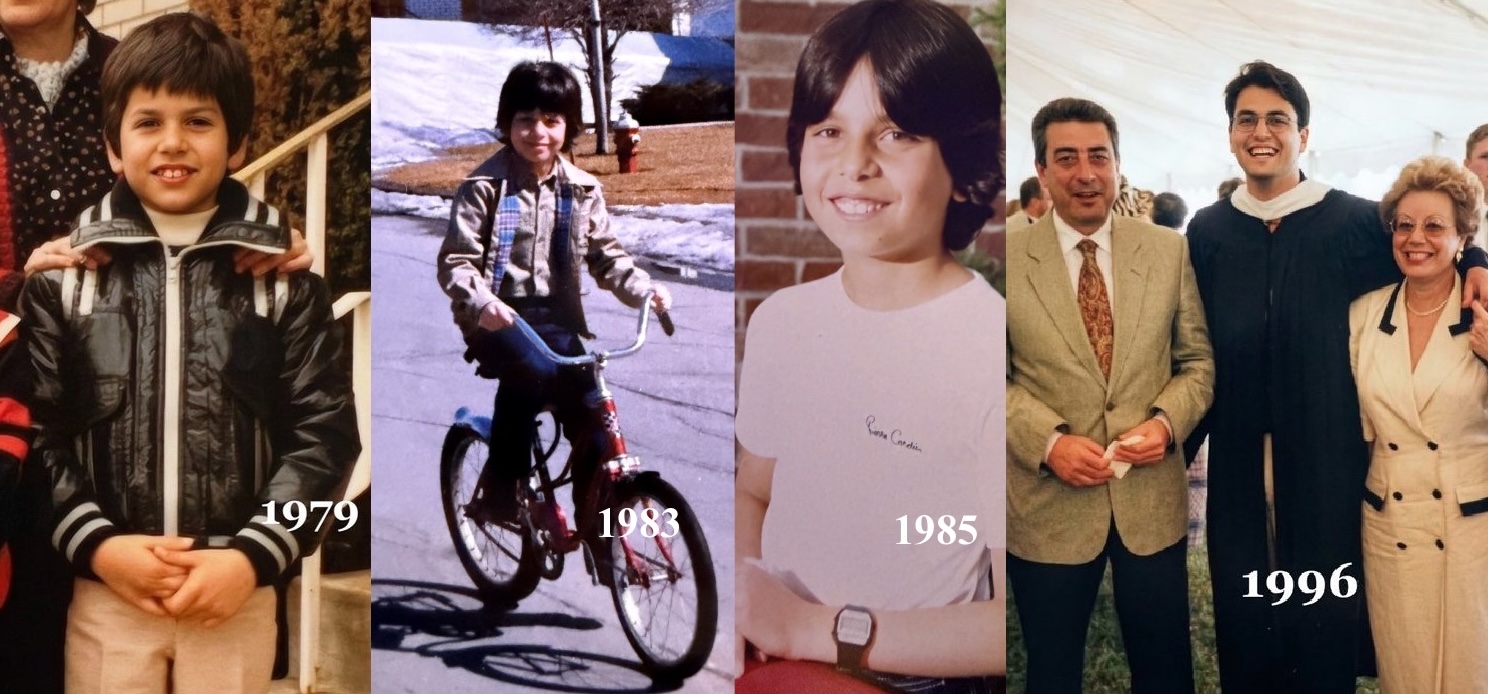
Gen X kids didn't have a digital layer between them and the world. You woke up, you went outside, and you stayed out until the streetlights came on — that was the universal signal that it was time to come home. Your bike was your vehicle and your neighborhood was the map. You explored without GPS, without a phone in your pocket, without anyone tracking where you were. You figured things out by doing them. You got lost and found your way back. You built things with your hands and your friends and whatever was lying around. That was the whole system.
There's a reason this matters later. That analog childhood taught you to be self-reliant, to tinker, to build, and to figure it out without instructions. That instinct never left.
"You've got mail."
The internet didn't arrive all at once. It arrived through a 28.8 kbps modem that screamed and hissed while it tied up the phone line — and if someone picked up the receiver in the kitchen, you were done. Your first login was probably an AOL free trial disc that came in the mail. When the trial expired, you made a new email address and used another disc. And another. Everyone did it. That was the workaround. That was the hack. That was the first lesson in using technology resourcefully even when you didn't fully understand how it worked.
And then the tools started stacking up. Each one felt like a small revolution.
ICQ
The "uh-oh" notification sound. A contact list of strangers who shared your exact interests. Real-time messaging before anyone called it that. You had a number, not a username — and you memorized it.
Napster & LimeWire
Downloading a single song took 45 minutes on a good connection. It wasn't just music — it was the first time regular people understood peer-to-peer networks. Your computer wasn't just receiving. It was part of something bigger.
Digg & forums
Before algorithms decided what you saw, you went looking for it. Forums organized by topic. Content curated by humans who actually cared about the subject. No influencer economy. No engagement bait. Just people sharing what they knew.
The phone line
Every minute online was a trade-off — the family couldn't use the phone. You negotiated for time. You planned your sessions. The internet wasn't ambient. It was an event. That forced you to be intentional.
Every one of these tools — despite being clunky, slow, and occasionally sketchy — had one thing in common: they created community. ICQ rooms, Napster forums, Digg threads. You found your people. The early internet was messy, but it was deeply human.
Content replaced community.
Social media started as connection — then the algorithm took over. The feed became the product. Engagement became the metric. The platforms that were supposed to bring people closer turned into broadcast channels where everyone was shouting and nobody was listening. Groups became ghost towns. DMs became spam. The creators who built audiences on these platforms didn't own anything — they rented attention from an algorithm that could change the rules at any time.
The community that defined the early internet didn't die — it was buried under layers of content optimization, ad targeting, and engagement metrics. People still crave real connection. The platforms just stopped building for it.
The desire for community never went away. The tools just stopped serving it. The early internet had it right — the platforms got it wrong. And somewhere in that gap, there was an opportunity.
Managing broker. Front-line operator.
Licensed in Ontario since 2007. Managing Broker since 2018, at a RE/MAX brokerage in the GTA. This isn't a side hustle built from a personal brand — this is someone who has sat in the operational seat for years, dealing with the same compliance headaches, TRESA requirements, FINTRAC forms, and deal submission chaos that every brokerage in Ontario faces. The difference is what happened next.
The AI wave didn't arrive as a marketing buzzword. It arrived as a practical question: can this actually solve the problems I see every day? Agents submitting incomplete deal packages. FINTRAC missing on a fraction of submissions. Hours burned on tasks that should take minutes. The answer wasn't "let's talk about AI" — it was "let's build something."
The problem nobody was solving
Thousands of AI creators online. YouTube channels with millions of views. But none of them sat in a managing broker's chair. None of them knew what TRESA was, or why a FINTRAC Individual Identification Information Record matters, or what happens when an agent submits without the RECO Information Guide. The managing broker seat in AI content was completely unoccupied — globally.
The white space
Generic AI education everywhere. Real estate AI content — almost nowhere. Ontario-specific brokerage operations AI content? Nonexistent. Not a single creator was showing what it looks like to deploy AI tools inside a regulated brokerage with hundreds of agents. That gap was the opportunity.
One conversation. One AI session. A full brand.
The brand didn't come from an agency. No designer was hired. No mood board review, no three-round approval process. BrokerBotics.ai and Agent Protocol were designed, iterated, and produced in a single Claude session — marks, colors, typography, production files, and documentation. The circuit cross. The signal rings. The orange node that connects them. All of it, built with the same AI tools the community would eventually teach.
It started with a photo of a TikTok recording setup — deep blue ambient wall light, warm amber glow from a monitor and a salt lamp. Those colors became the palette. The rest was iteration: concept exploration, geometry refinement, rendering, correction, re-render. The back-and-forth is what produced the result.
- BrokerBotics.ai — the parent company. The infrastructure brand. Technology platform for everything that comes after. Blue-forward: operator energy, systems, scale.
- Agent Protocol — the first product. A paid Skool community where licensed Canadian real estate agents learn to build their own AI-powered business systems. Amber-forward: warmth, education, community. Not a course — a living curriculum that evolves with the industry.
- The positioning — "the broker who actually builds it." Not a consultant. Not an educator who's never done the work. A practitioner-builder who sits in the operational seat and teaches what he builds. The brand that teaches agents to build with AI was itself built entirely with AI.
The origin story is the proof of concept. You don't need an agency. You don't need a designer. You don't need a VA. You need a clear problem, the right tools, and the willingness to sit in the chair and build. That's what Agent Protocol teaches — and the brand is the first case study.
The early internet taught a Gen X kid that you could find your people online — that community wasn't limited to your neighborhood. Social media broke that promise. And now the wheel is turning again.
Platforms like Skool are stripping away the noise and going back to what worked: small groups, shared interests, real conversations, actual results. No algorithmic feed deciding what you see. No content treadmill. Just a room full of people who care about the same thing, led by someone who's doing the work — not just talking about it.
Agent Protocol is that room for Canadian real estate agents who want to build with AI. Not watch videos about AI. Not outsource to someone else. Build it themselves.
Streetlights → Dial-up → Community → Agent Protocol
A kid who explored without a map became a broker who manages hundreds of agents. A teenager who hacked AOL free trials became someone who builds production AI tools in a single Claude session. And the early-internet instinct — find your people, share what you know, build something together — became the foundation of a paid community that teaches agents to do exactly that. The tools changed. The instinct didn't.
The desire for community never went away. People still want to find others who care about the same things and build something meaningful together. The early internet had it right. Agent Protocol is bringing that energy back — for the agents who are ready to build.
Ready to build?
Agent Protocol is the community for licensed Canadian real estate agents who want to deploy real AI systems — built by someone who's already done it.
See Agent Protocol →